Factors Affecting the Continued Use of E-Learning Among Socioeconomically Disadvantaged
Keywords:
E-learning, continued use, higher education, socioeconomically disadvantagedAbstract
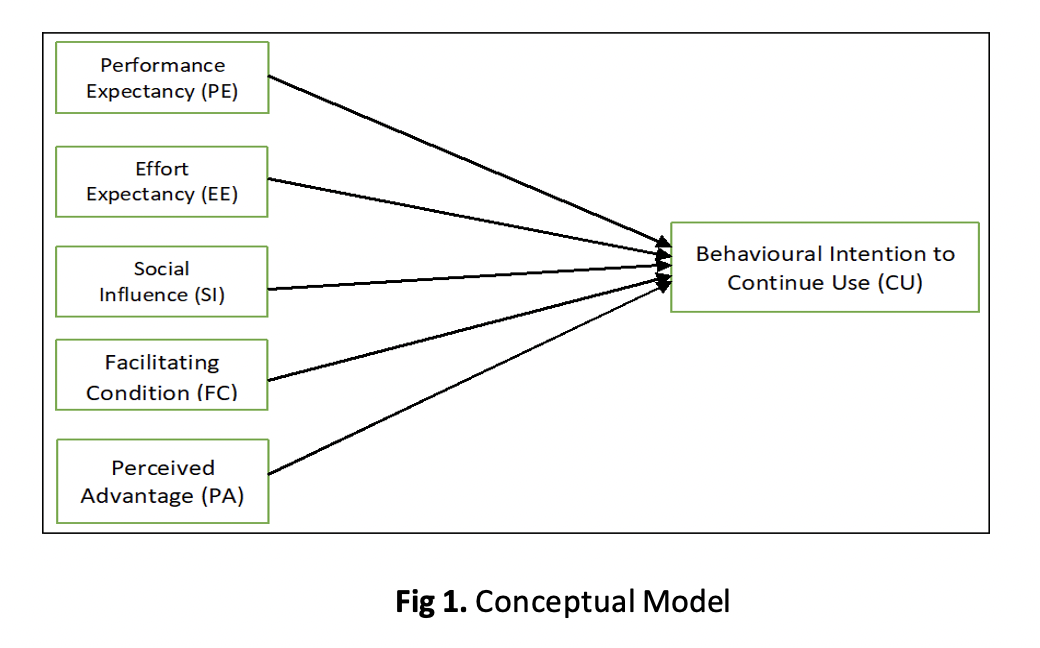
The integration of e-learning in higher education sector presents both exciting opportunities and significant challenges. While e-learning has the potential to revolutionize personalized learning, flexibility and lifelong learning continued use as a new norm in learning process need careful attention. The survey method was conducted when the COVID-19 quarantine period had been removed and the learning process was stillmandatory to attend lectures through e-learning as a teaching medium. An electronic survey of 25 items was conducted to identify the population of socioeconomically disadvantaged students towards continued use of e-learning during post-pandemic. A survey was used to measure variables including performance expectancy, effort expectancy, social influence, facilitating conditions, and perceived advantage, among a sample of 424students. Descriptive statistics analysis was conducted to evaluate the relationships between variables. The findings of this survey on the factor affecting continued use of e-learning, the variable of performance expectancy, effort expectancy, social influence, facilitating conditions, andperceived advantage, have a statistical impact on the continued use of e-learning. These findings can significantly impact policy decisions, educational practices, technological advancements, and the overall social landscape, promoting inclusive and accessible education for all.Downloads
Download data is not yet available.
Downloads
Published
2025-12-19
How to Cite
Saad, S. ., Mat Yamin, F. ., David, J. ., & Ramli, M. F. . (2025). Factors Affecting the Continued Use of E-Learning Among Socioeconomically Disadvantaged. Journal of Advanced Research Design, 135(1), 308–322. Retrieved from https://akademiabaru.com/submit/index.php/ard/article/view/6807
Issue
Section
Articles